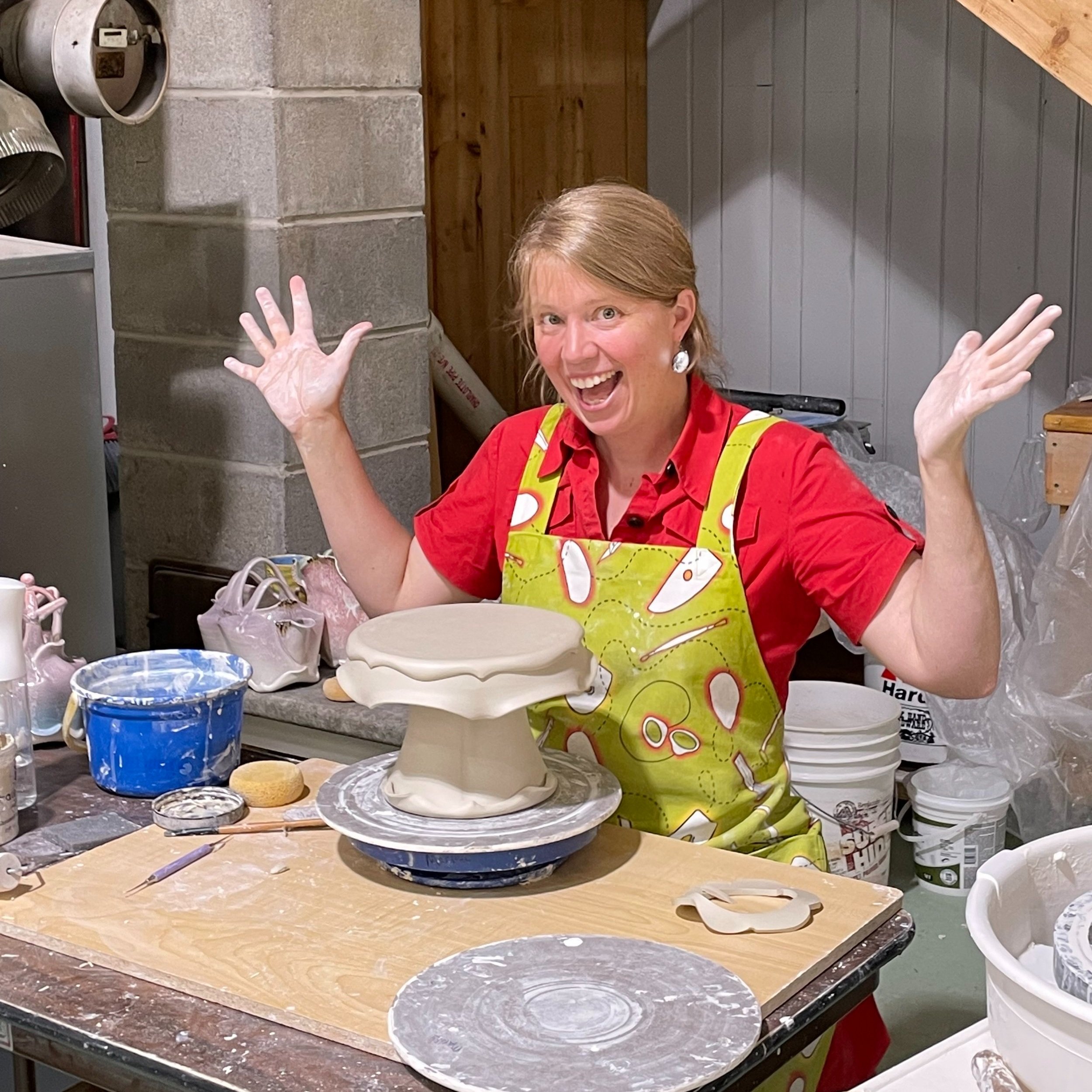
Martha Grover, The Maker’s Playbook, Ep 620: Protecting Your Artistic Voice
What happens when we approach our artistic development not as lightning-bolt inspiration but as intentional practice—exploring the minute details that fascinate us while carefully choosing which external voices we allow to influence our work? Throughout her 23-year career, Martha Grover has done just that, and the iconic look of her distinct thrown and altered porcelain vessels reveals how a pragmatic approach to the mystical journey of finding your creative voice can often be the most sustainable approach. In this episode, Martha shares the realities of being a studio potter in 2025 and how that actually looks like balancing her time between many different roles. Whether it be teaching workshops, running a community studio or maintaining her own making practice, Martha demonstrates how “success” for artists today often means deciding what is enough rather than giving in to constant growth. Even when you have a 101 person waitlist. Could the clarity to set these boundaries be what allows your unique artistic voice to thrive both creatively and financially?
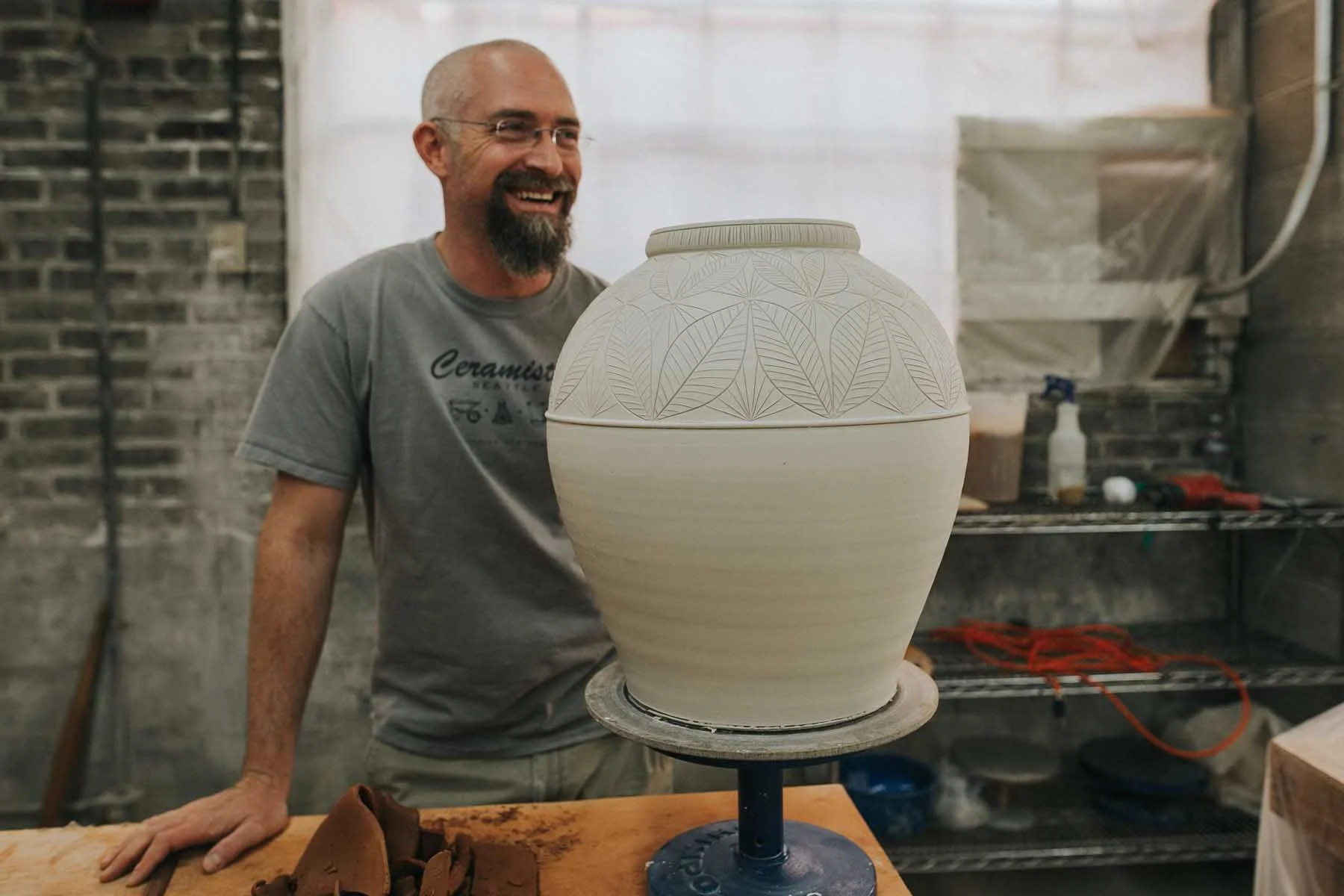
Adam Field, The Maker’s Playbook, Ep 301 : A Lifelong Pursuit of Learning
We are back! Season 3 of the Maker’s Playbook podcast kicks off with Adam Field! In this episode, Adam and I dig into how he managed to say yes to a multi-year residency program at the Archie Bray with 2 kiddos in tow, how he integrates social media into his studio practice, and the vulnerability it takes to change the style of our work when also making a living from that work. This is a conversation I know I personally will be returning to frequently.

Simon Levin, The Maker’s Playbook, Ep 108: Craft vs. Art
This week I’m chatting with woodfire potter, Simon Levin. A self-proclaimed “evangelist of clay” who continually finds ways to bring educational resources outside of the traditional structure to the clay community.
After over 30 years working as a full-time studio potter, there were almost endless subjects we touch upon in this conversation that could be entire podcast episodes onto themselves - How to make what you want first, and market second, the difference between craft and art, and so much more.
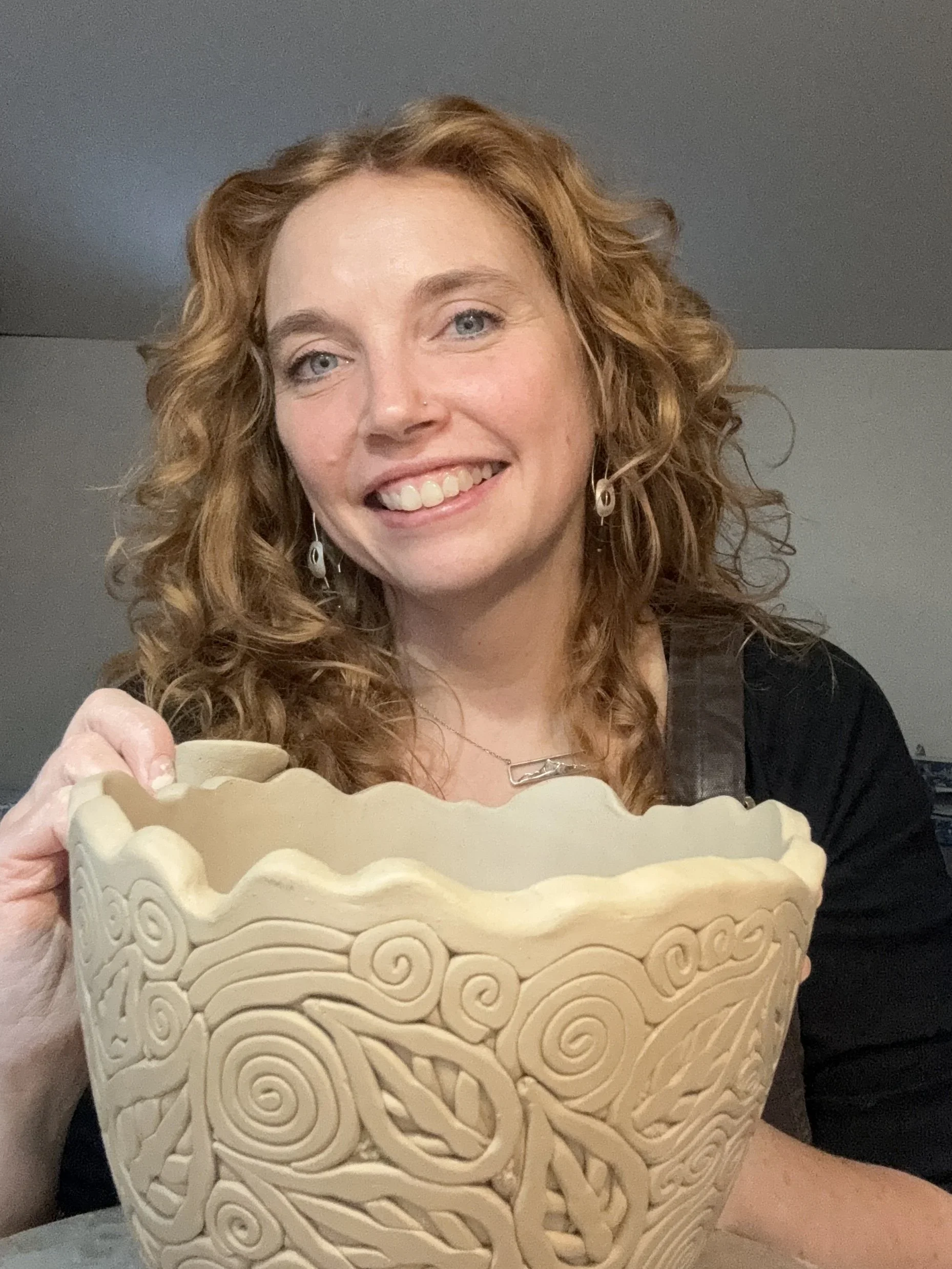
AnnMarie Cooper, The Maker’s Playbook, Ep 618: A Journey to Gallery Ownership: Good Earth Gallery
As makers, we often envy others' seemingly polished creative lives without seeing the winding path they took to get there. AnnMarie Cooper's journey from gallery employee to pottery gallery owner, cohorts program manager, and shared studio founder reveals how real artistic careers evolve through countless iterations - from taking community college classes and working in an 80-square-foot backyard shed to finding her voice through unexpected owl designs. Her story reminds us that the current stage of any maker's journey was built on multiple transitions, space adjustments, and boundary-setting exercises that responded to both creative and family needs. Behind every Instagram-worthy studio or established gallery lies years of gradual growth, experimentation, and community-building that transformed initial passion into sustainable creative practice.
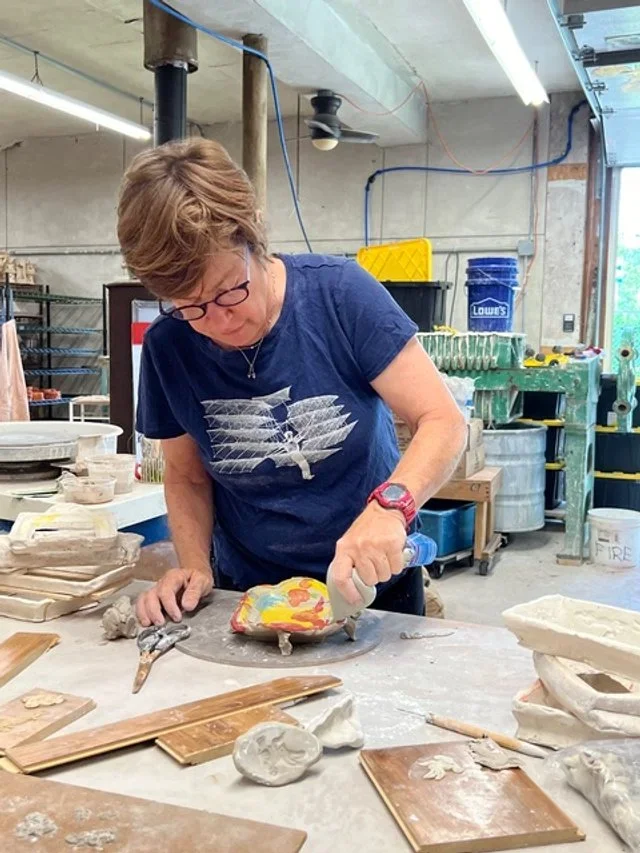
Lisa Orr, The Maker’s Playbook Ep 615: The Importance of Mentorship
Here on the podcast, we often talk about the delicate balancing act between creative fulfillment and business sustainability - a struggle that can feel overwhelming without guidance. What if finding the right mentor could be the pivotal moment that transforms your creative practice and career trajectory? When Lisa Orr sought out Betty Woodman as a mentor, it completely shifted her perspective on materials, giving her permission to pursue colorful earthenware despite the stoneware-dominated ceramics world of the 1980s. Through her journey from studying with established potters to international research and eventually becoming a mentor herself, Lisa reveals how these relationships provided not just technical knowledge but practical business skills alongside the confidence to challenge current assumptions. Could the difference between struggling in isolation as an artist and building a sustainable decades-long pottery career be found in actively seeking mentorship and finding your creative community?