Deep Dive into Decorative Enameling Techniques
with Barbara Minor
Course Schedule:
3rd Saturday of the month // 11:00am -1:00pm - EST
Course Description:
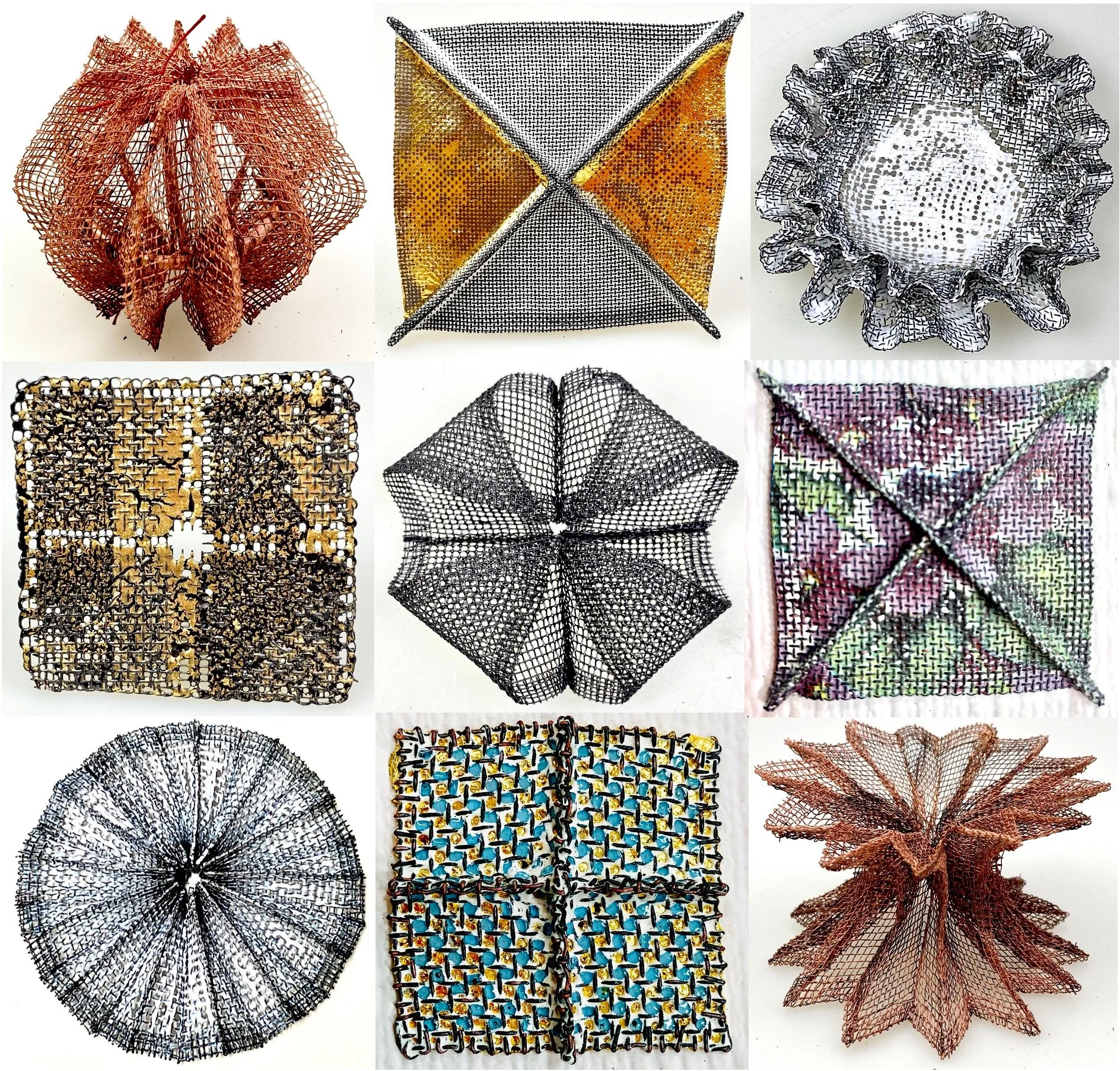
My Metals Continuum group will focus on various traditional and experimental vitreous enameling techniques on metal.
The goals for the year include developing a broader and deeper knowledge base in decorative enameling techniques, perfecting and applying that understanding of those processes to achieve specific, successful results based on your ideas.
The increased understanding of enamel properties and behavior will enable troubleshooting and problem-solving, as well as innovation beyond what has already been learned.
Monthly two-hour sessions will focus on decorative enameling techniques and the relevant fundamentals of enameling to build a solid technical foundation for participants and their future enamel works.
Before the start of 2027, the group will consider possible topics from a list of enamel techniques to focus on for the year via email. Based on the group's needs and collective interests, specific topics to explore and the order of their presentation will then be determined.
Possible topics for consideration are listed in no particular order and may include the following.
- Enameling Basics - sifting vs. wet packing, preparing enamels for specific techniques, understanding Fusion Flow/Softening Point/Coefficient of Expansion and Contraction, and more.
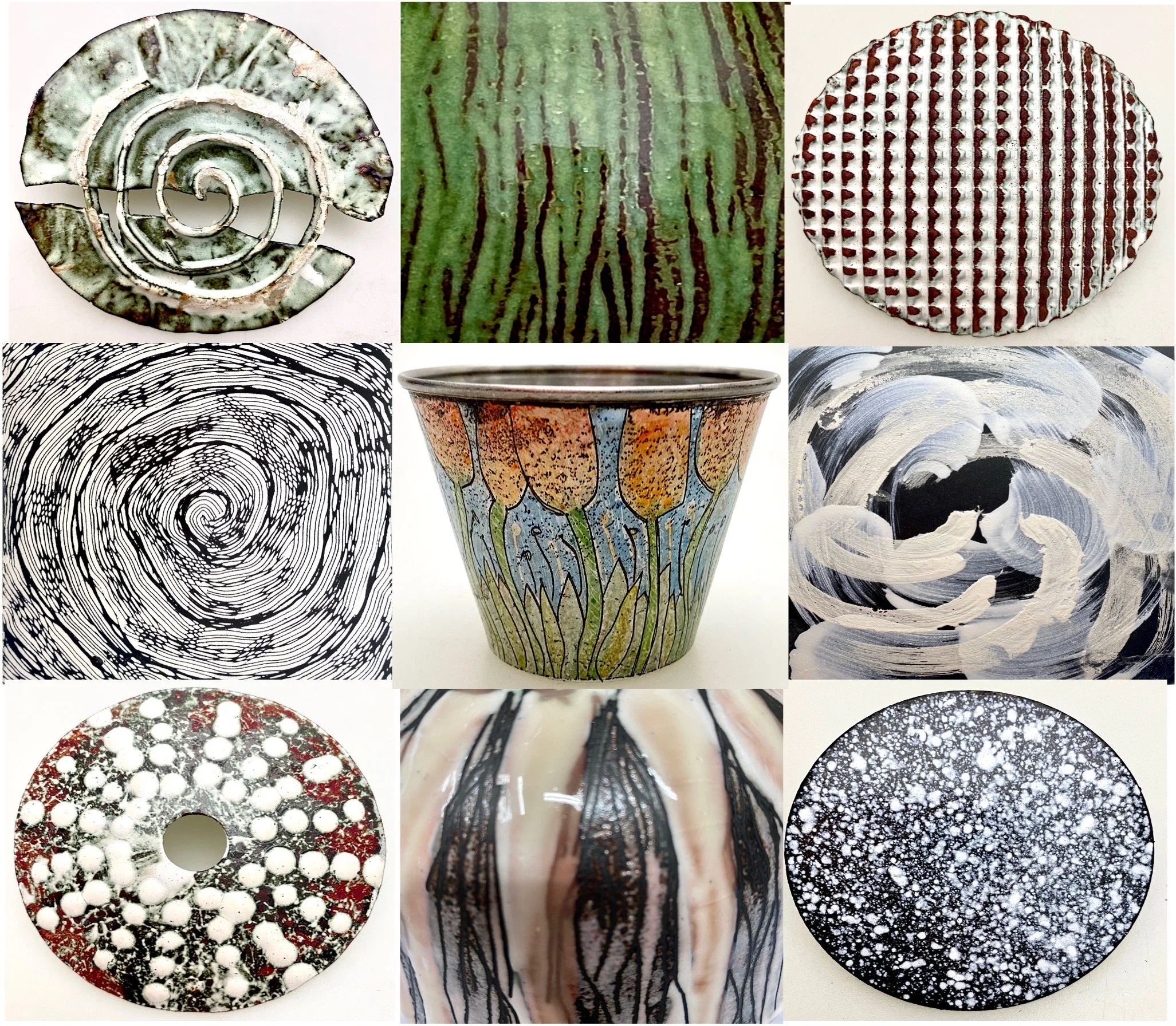
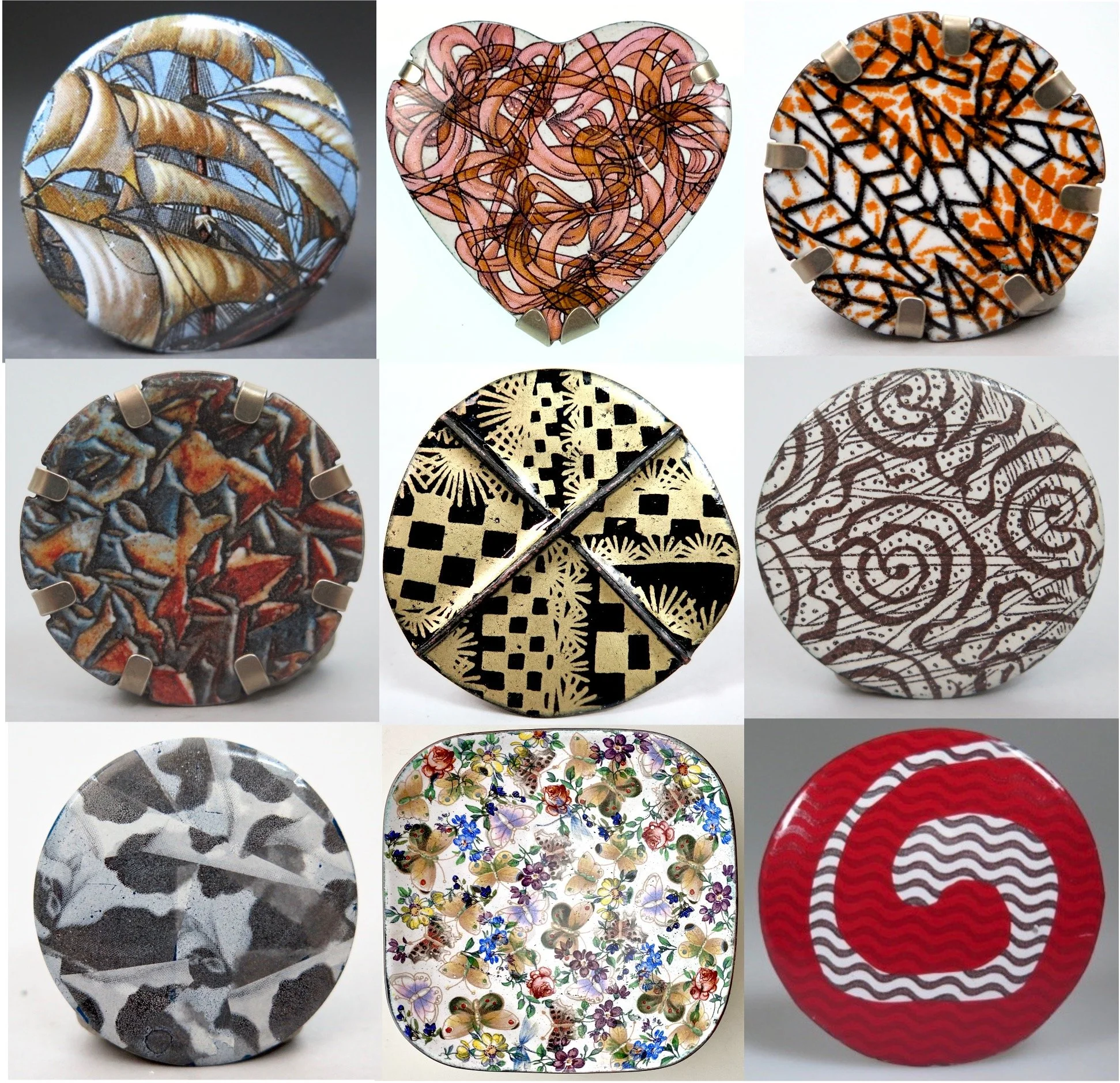
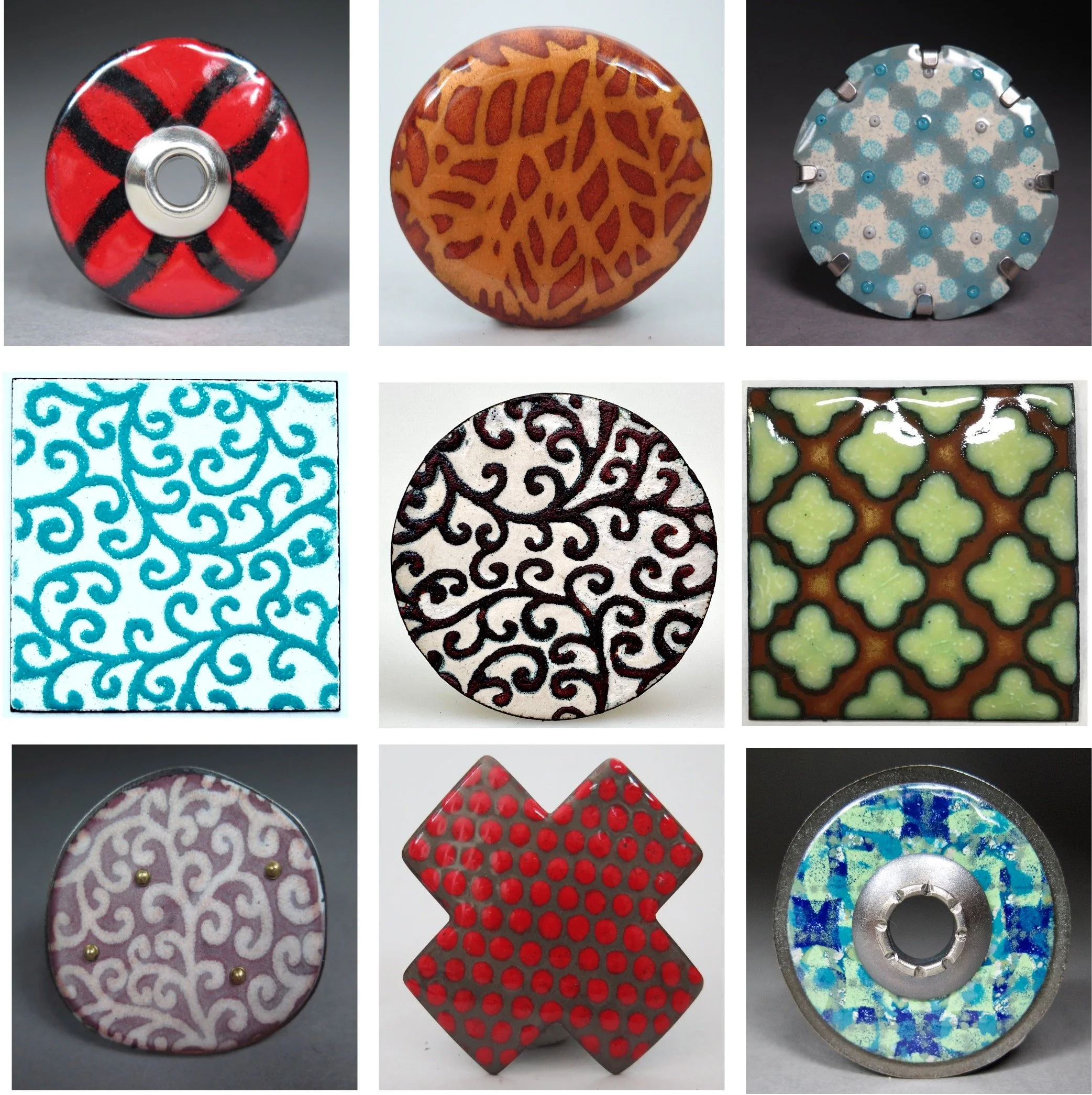
- Decorative Surface Design Techniques - stencils, dry screen printing and making the screens, sgraffito with wet and dry enamels
- Decals - application of vintage, custom, pre-made, iron oxide using a laser printer, making decals using acrylic enamels.
- Transparent Enamels on Copper - achieving clarity and good color with or without a flux or white base coat.
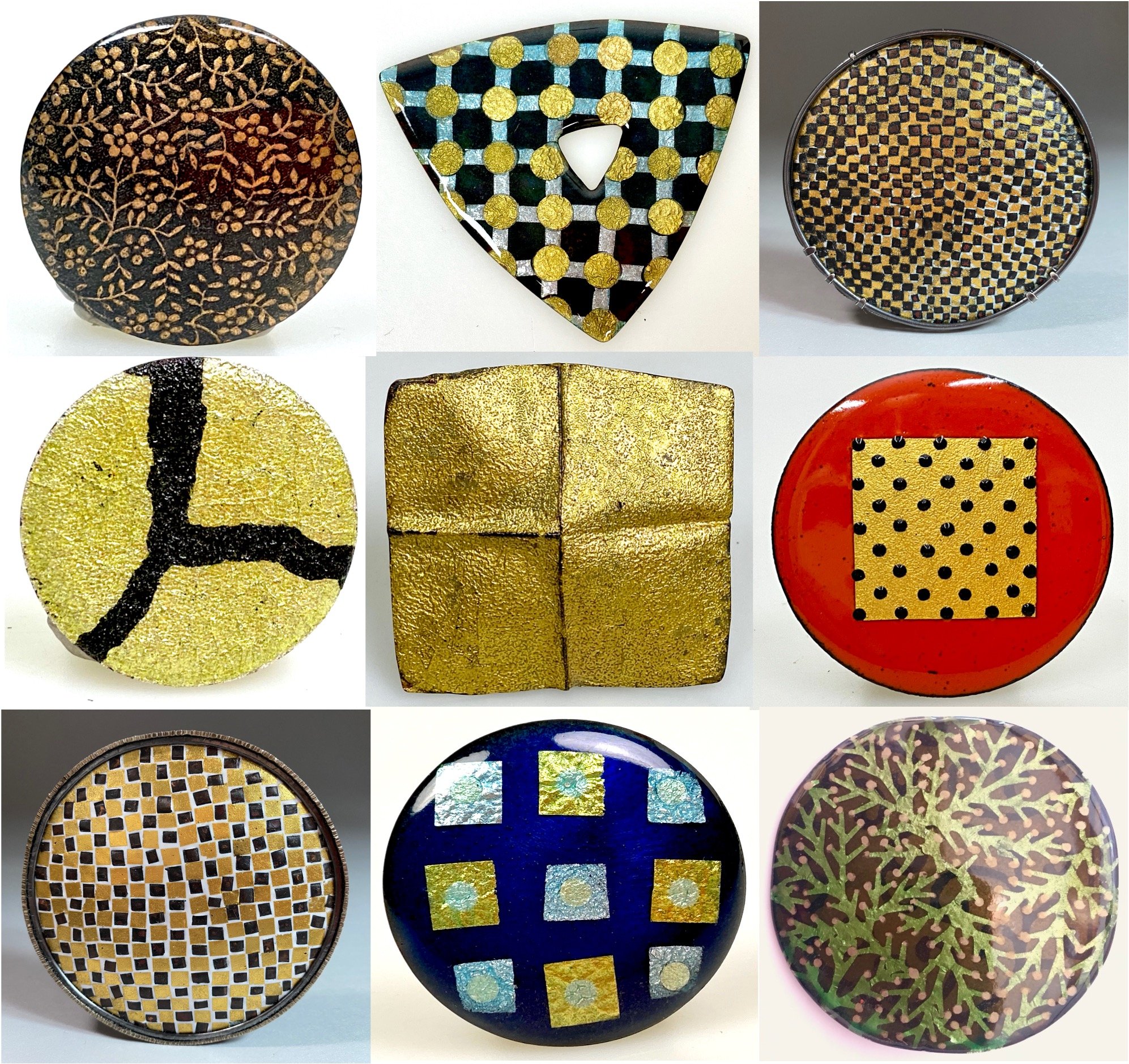
- Foils with Transparent Enamels on Copper - large sheets, small pieces and patterns, and embossed foils (a.k.a. Ginbari).
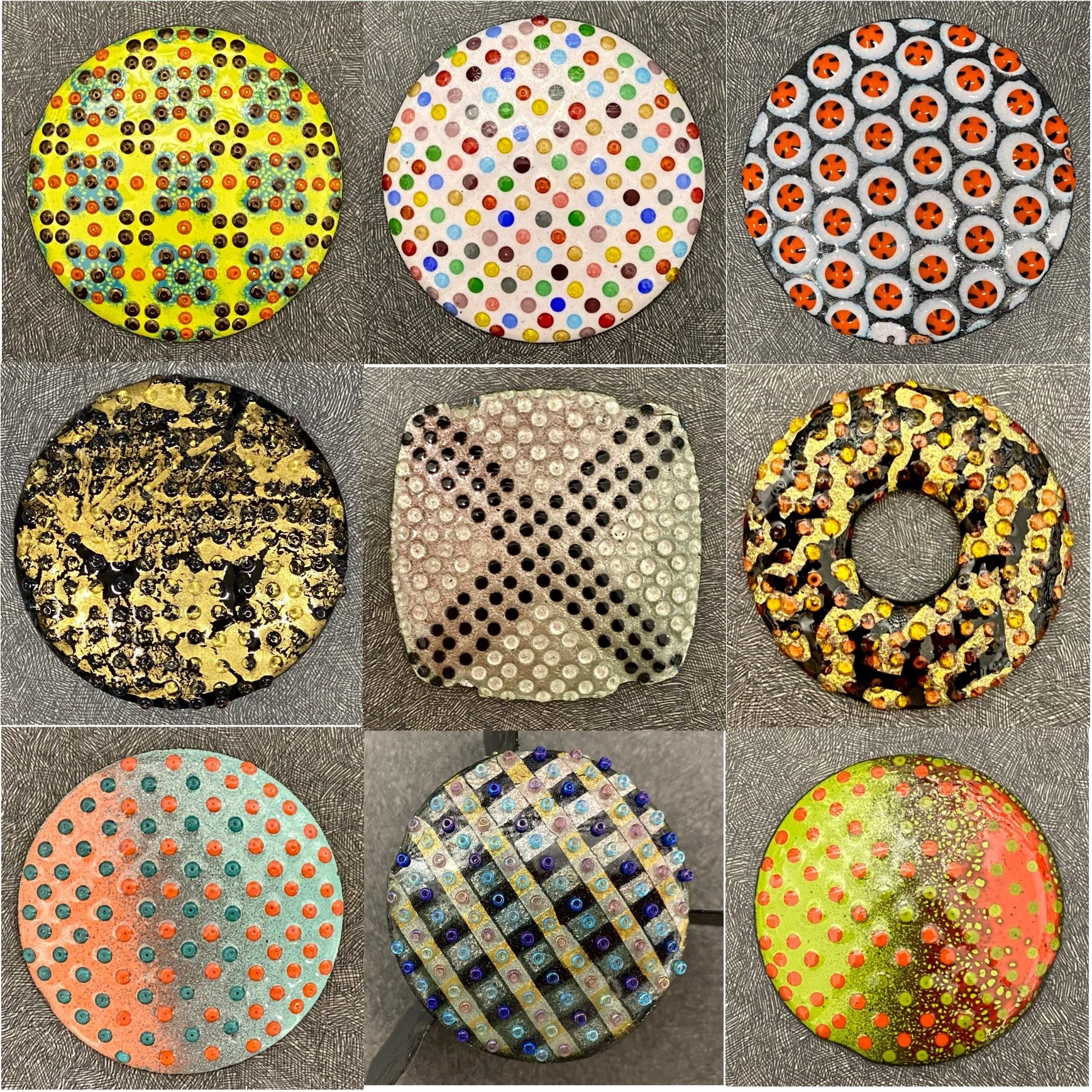
- Inlay Techniques - seed beads, enamel shards, tubing, corrugated wire, mille fiore.
- Overlay Techniques - reflective runway glass beads, copper filings, screen scrap or frit conglomerate, sand.
- Metal Texturing - roller printing, etching chasing, use of underglaze black.
- Liquid Enamels - mixing, application, dipping, brushing, spraying, in combination with transparent powdered enamel.
- Soldered vs. Cold-Connected Settings - rivets, mini nuts/bolts, chemical bonding (a.k.a. epoxy), hard soldering settings and findings.
The monthly topics will focus on selected enamel techniques, presented through intensive, fast-paced demonstrations accompanied by bullet-point handouts that include photographs, a supplier list, and a list of readings and artists to research.
Periodically, participants will present what they have been working on, followed by a discussion of progress, problems, questions and answers related to previously covered topics.
Between monthly meetings, participants can engage with each other and share what they are working on in a Google Chat group. Discussion, progress, images, questions, answers, and additional information will also be shared via Google Chat threads so everyone can benefit from one person's question or input.
I look forward to working with you and welcome any questions you may have about the described content at bminorhentz@icloud.com.
Registration opens October 19th at 10am Central Time
About Barbara
Barbara grew up outside of Chicago. She earned a BFA degree in Jewelry/Metalsmithing from the University of Illinois. Her love for enameling began during her graduate studies at Indiana State University and continued through ten years of college teaching at SUNY Geneseo. After leaving academia, Barbara dedicated her professional life, as a full-time studio artist, to creating and marketing her enameled jewelry for galleries and juried craft shows. Her studio practice now concentrates on researching and innovating enamel processes, preparing to teach workshops, and creating unique enameled jewelry and objects that showcase her advanced and well-developed enameling and metalworking skills.